Picture this, two stores run the same 30% off sale for Black Friday.
Store one emails its whole list five times in four days.
Store two gives its best customers a head start, emails only people who opened recently, and stops emailing anyone who’s already bought.
By Monday, store one is landing in spam. Store two is still in the inbox.
Same sale. Only one of them gets read.
Why? Gmail tells bulk senders to keep their spam rate under 0.1%, and to never reach 0.3%. That’s 3 complaints for every 1,000 emails. Send your whole list five emails in four days, like store one, and you can get there fast.
The fix is sending fewer emails, to the people most likely to buy.
That’s the whole plan. Below you’ll find a checklist to run before you send anything, a send plan with this year’s dates, a template for every email in it, and real examples from other stores. Copy the templates, fill in the brackets, and you’re most of the way there.
Starting late? Send these three.
If it’s the week of and you’ve got nothing planned, skip to these:
- VIP early access (Nov 24 or 25)
- Black Friday launch (Nov 27)
- Last chance (Tue, Dec 1)
Or connect your store to Reachly and ask your AI to draft all three.
The Black Friday email checklist (before you send anything)
Do these first. Most of them take ten minutes. Skipping them is how a good sale ends up in spam.
Deliverability
- Ramp up your volume now. Raise how often you send a little each week from now on. By Black Friday, a daily email looks normal instead of suspicious. Reading this the week before? Skip the ramp-up and keep your extra sends to your engaged segment.
- Check your authentication before a big send. Gmail and Yahoo now require it, and your biggest week of the year is a bad time to find out it’s missing. Our deliverability guide shows you what to look for.
Your list
- Grow your list before the sale. Add a signup form that offers early access to the sale. Everyone who joins in November is already planning to shop.
- Build a VIP segment. Your best customers. If you’re not sure who they are, start with everyone who’s bought from you before. They get the sale first.
- Build an engaged segment. People who opened or clicked in the last 90 days. This is your main Black Friday list.
- Leave out the ghosts. Someone who hasn’t opened since spring isn’t coming back for Black Friday. They’re coming back to hit “spam.” Don’t send them the sale.
- Plan to suppress recent buyers. Anyone who buys should drop out of the reminder and last-chance emails. Nobody likes seeing a deal two hours after paying for it.
Your flows
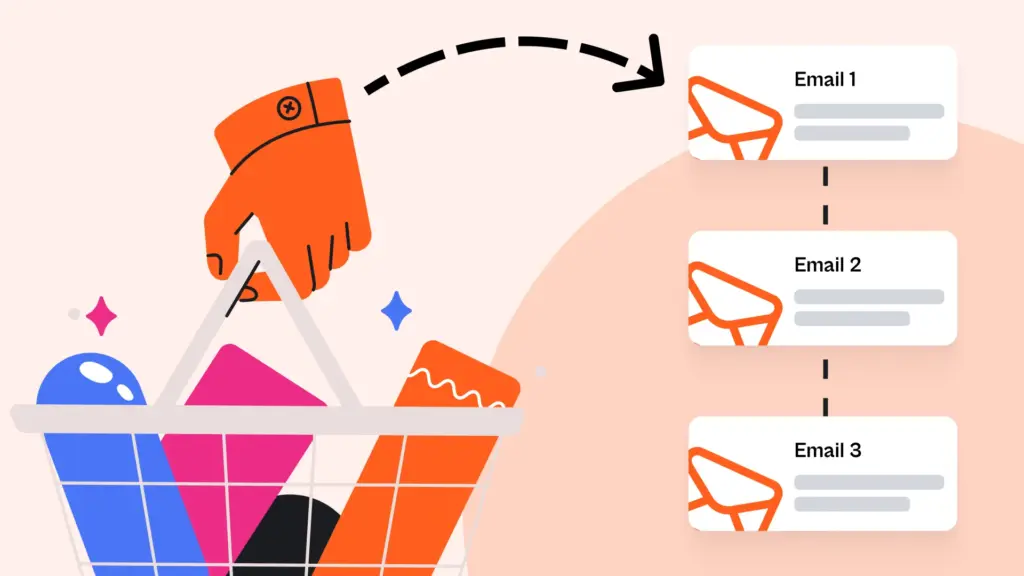
- Check your abandoned cart emails. Carts spike with everything else. If you have an abandoned cart flow, make sure it’s on. If it includes a discount code, make sure it can’t stack on top of your sale price. Don’t have one yet? Here’s how to set one up.
- Check your other automations for discounts. If a welcome or winback email gives 10% off, decide whether it should run during the sale. Pause it or swap the offer, so nobody gets two different deals in the same week.
- Check your welcome flow. You’ll get more signups this month than any other. Make sure new subscribers hear from you right away. Here’s what a good welcome email looks like.
Your offer
- Create and test your discount codes. Use them yourself on a real order. Check expiry dates and whether codes can stack.
- Decide your shipping cutoff dates. You’ll need them for December.
- Build the landing pages first. Every link in every email should go somewhere that already works.
Your emails
- Test on your phone. That’s where people shop now. Last Cyber Monday, 57.5% of U.S. online sales came from phones, according to Adobe.
- Test in dark mode. Logos and black text on transparent backgrounds disappear.
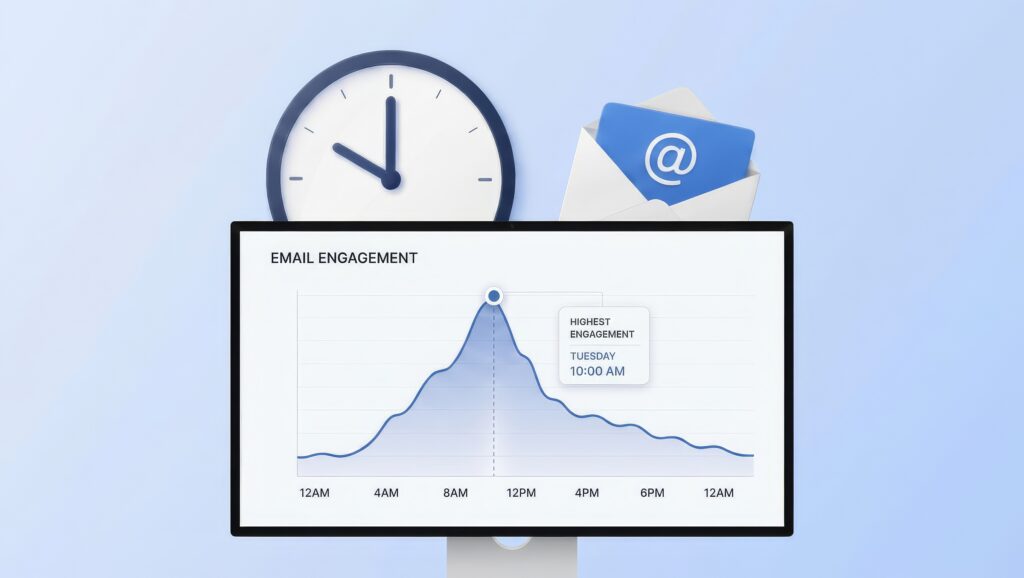
- Plan your send times. Here’s what the data says about timing.
Pick your offer first
Your offer decides what every email says, so settle it before you write anything.
- Percent off. Simple and expected. Last year, discounts peaked at 25% off in apparel and 31% in electronics, per Adobe. A small percent can get lost next to that.
- Dollar off a minimum spend. “$20 off $100.” Protects your margin and nudges order size up.
- Free shipping. Works well when your average order is small or shipping is a big part of the price.
- Gift with purchase. A free add-on in place of a discount. Good for brands that don’t want people waiting for sales.
- Bundles. Pair a bestseller with something that moves slower.
- No discount at all. Some brands skip the sale and send a limited drop, a donation, or a note about why they don’t discount. It’s a real option if sales don’t fit your brand.
Pick one main offer. Every email in the sequence points back to it.
The Black Friday email sequence
Here’s the whole plan with this year’s dates. Black Friday is Friday, Nov 27. Cyber Monday is Nov 30.
| When | Who gets it | |
|---|---|---|
| 1. Teaser | Nov 17 to 20 | Engaged list |
| 2. VIP early access | Nov 24 or 25 | VIPs only |
| 3. Subscriber early access | Thu, Nov 26 | Engaged list |
| 4. Black Friday launch | Fri, Nov 27 | Engaged, haven’t bought |
| 5. Bestsellers or low stock | Nov 27 or 28 | Opened or clicked, didn’t buy |
| 6. Small Business Saturday | Sat, Nov 28 | Engaged, haven’t bought |
| 7. Cyber Monday | Mon, Nov 30 | Engaged, haven’t bought |
| 8. Last chance | Tue, Dec 1 | Engaged, haven’t bought |
Eight emails sounds like a lot. But look at the last column. Almost nobody gets all eight. Your VIPs hear from you first. Buyers drop out as soon as they buy. People who never open don’t get any.
That’s how you send more without getting the “please stop” treatment.
Email 1: The teaser
When: Nov 17 to 20
Who: engaged subscribers
Its job: tell people the sale is coming, so they wait for you instead of buying somewhere else.
Shoppers start early. In Circana’s survey last year, 44% planned to start holiday shopping before Thanksgiving. By Thanksgiving weekend, 84% had already started, according to the NRF. A teaser puts you on their shopping list before they’ve made one.
Subject lines
- Mark your calendar: [Brand] Black Friday starts [date]
- Our biggest sale of the year is [X] days away
- Don’t buy anything yet
Preview text: Here’s what’s coming, and how to get in first.
Template
Hey [First name],
Quick heads up. Our Black Friday sale starts [Nov 27].
[Discount, for example “30% off everything”]. No codes, no catches.
Want in early? Subscribers get access before the sale opens to everyone. [Keep an eye on your inbox / Join the early list].
[Button: See what’s going on sale]
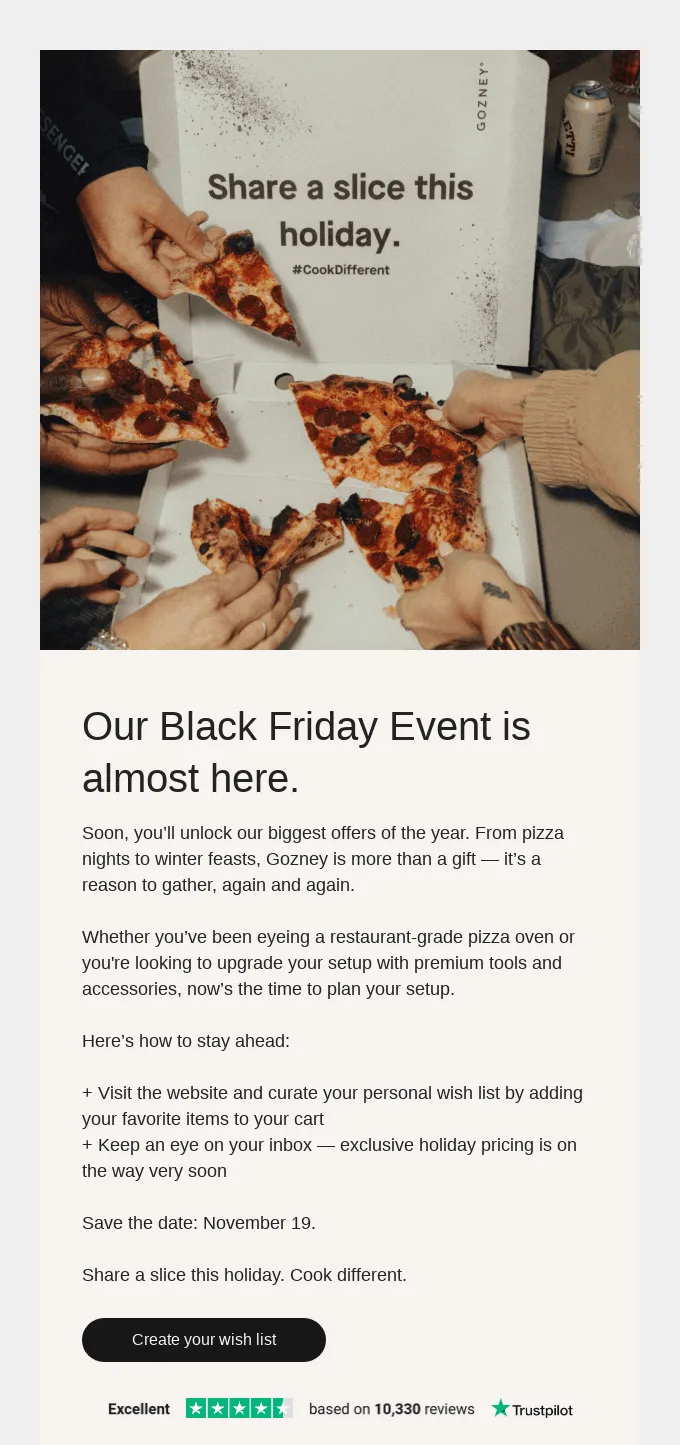
Black Friday email example: Gozney
The pizza oven brand gives a date (Nov 19) and two things to do before the sale opens: build a wish list and watch your inbox. By the time the sale starts, people have already picked what they want.
Email 2: VIP early access
When: Nov 24 or 25
Who: VIPs only
Its job: reward your best customers and give you an extra day of sales.
If you only add one email this year, make it this one.
Your best customers already trust you. Early access makes them feel like insiders, and it gives you an extra day of sales before every inbox fills up.
Subject lines
- You’re in early
- [First name], the sale starts now (for you)
- Before anyone else: [Discount] off
Preview text: Everyone else has to wait. You don’t.
Template
Hey [First name],
You’ve been with us for a while, so you get the sale first.
[Discount] off [everything / the collection] starts right now. Everyone else has to wait a few more days.
[Optional: Our bestsellers sell out. This is your best shot at [Product].]
[Button: Shop early access]
Thanks for being one of the good ones.
[Name]
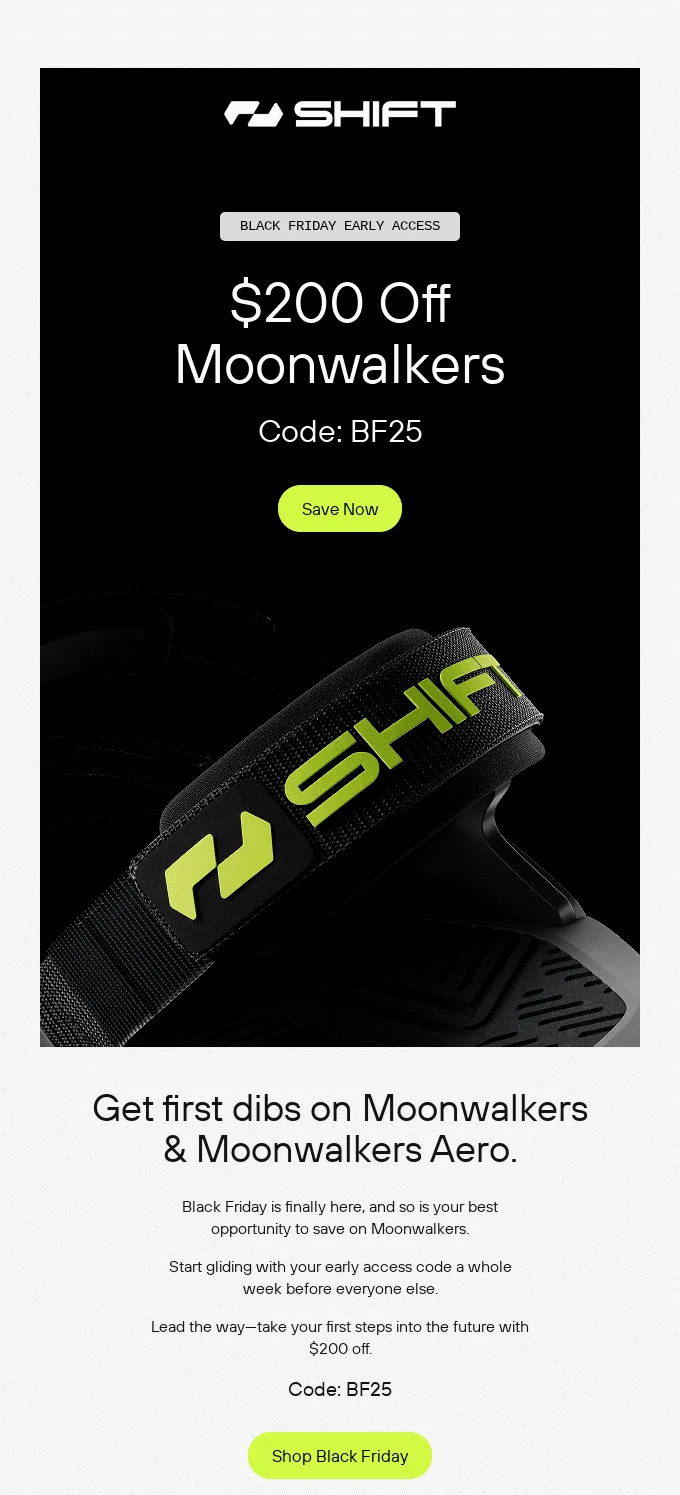
Black Friday email example: Shift Robotics
One offer ($200 off), one code, and the reason it’s special right up top: you get it a whole week before everyone else.
Email 3: Subscriber early access
When: Thanksgiving, Nov 26
Who: engaged subscribers (VIPs who already bought drop out)
Its job: open the sale to your list before the Black Friday noise starts.
Subject lines
- The sale’s open. You’re early.
- Happy Thanksgiving. Here’s [Discount] off.
- Skip the Friday rush
Preview text: Our Black Friday sale is live a day early for subscribers.
Template
Hey [First name],
Happy Thanksgiving.
Our Black Friday sale is open early for subscribers. [Discount] off [everything], starting now.
Shop from the couch. Leftovers optional.
[Button: Shop the sale]
Email 4: Black Friday launch
When: Black Friday morning, Nov 27
Who: engaged subscribers who haven’t bought
Its job: the main event. Make it clear and fast.
One offer. One button. No essay.
Their inbox is full of these today. Make yours the one they understand in two seconds.
Subject lines
- Black Friday: [Discount] off everything
- It’s here
- [Discount] off, today through Monday
Preview text: No code needed. Ends [date].
Template
[Headline: [Discount] off everything]
Our Black Friday sale is live. [Discount] off [everything / sitewide], through [Cyber Monday].
[3 product cards: bestsellers with sale prices]
[Button: Shop Black Friday]
[Small print: shipping cutoff, any exclusions]
Didn’t open it? Resend the launch Friday afternoon to people who didn’t open the first one. Same email, new subject line. It’s the cheapest second chance you’ll get all week.
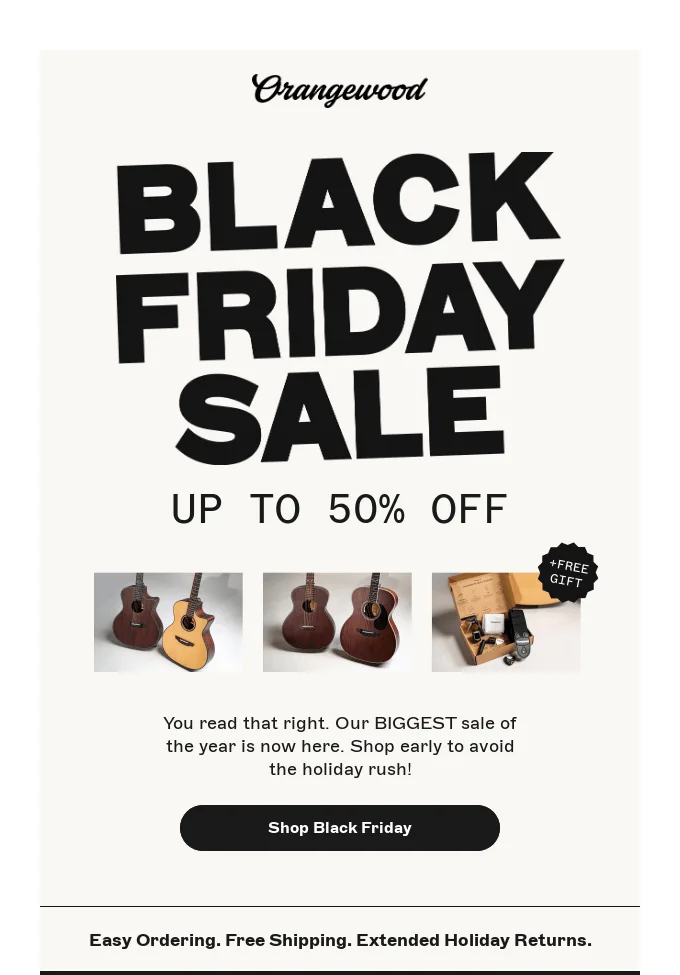
Black Friday email example: Orangewood Guitars
A huge headline, one offer (up to 50% off), three products and one button. You get the whole email in two seconds.
Email 5: Bestsellers or low stock
When: Black Friday evening or Saturday morning
Who: people who opened or clicked but didn’t buy
Its job: give the people who looked a reason to come back.
These people already showed interest. Don’t resend the launch. Show them something new: what’s selling, or what’s almost gone.
Subject lines
- These are going fast
- What everyone’s buying today
- [Product] is almost gone
Preview text: The sale’s still on. Some sizes aren’t.
Template
Hey [First name],
Here’s what’s selling the fastest so far:
[3 to 4 bestsellers, with “low stock” labels only where it’s true]
The sale runs through [Monday]. Some of these won’t.
[Button: Shop bestsellers]
Only say “low stock” when it’s true. Fake scarcity works once, and then people stop believing you.
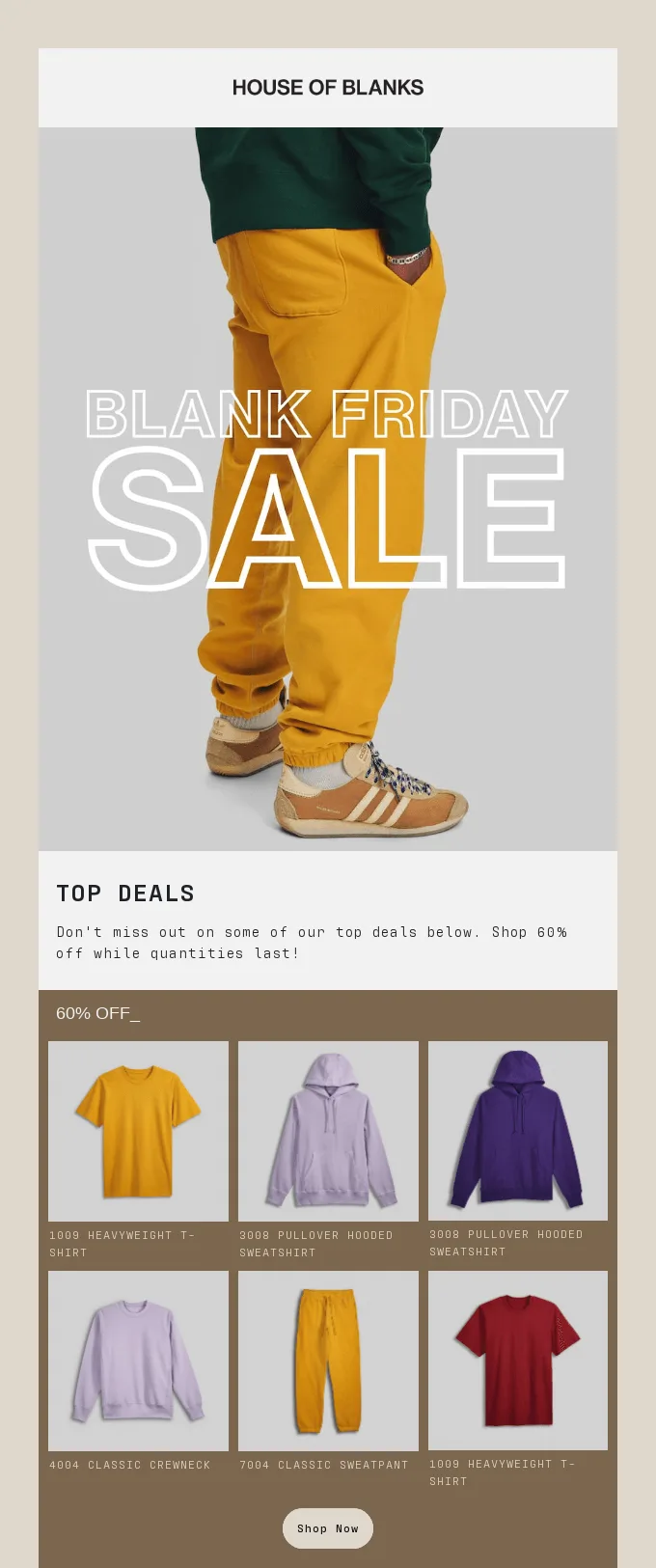
Black Friday email example: House of Blanks
Skip the essay and show the products. House of Blanks puts its top deals in a grid with prices, with “while quantities last” under the heading.
Email 6: Small Business Saturday (optional)
When: Saturday, Nov 28
Who: engaged subscribers who haven’t bought
Its job: remind people a real small business is behind the store.
Small Business Saturday was started by American Express in 2010, and the U.S. Small Business Administration has cosponsored it since 2011. If you’re an independent brand, it’s a natural story to tell. If you’re not, skip this one.
Subject lines
- Shop small today
- From our [workshop / kitchen / garage] to you
- The story behind [Brand]
Preview text: Our sale is still on, and every order goes to a real person.
Template
Hey [First name],
Today’s Small Business Saturday, so here’s a quick hello from [the team / me / all four of us].
[One or two sentences: who you are, where things get made or packed, one real detail.]
Our sale’s still running. [Discount] off until [Monday].
[Button: Shop small]
Thanks for supporting us.
[Name]
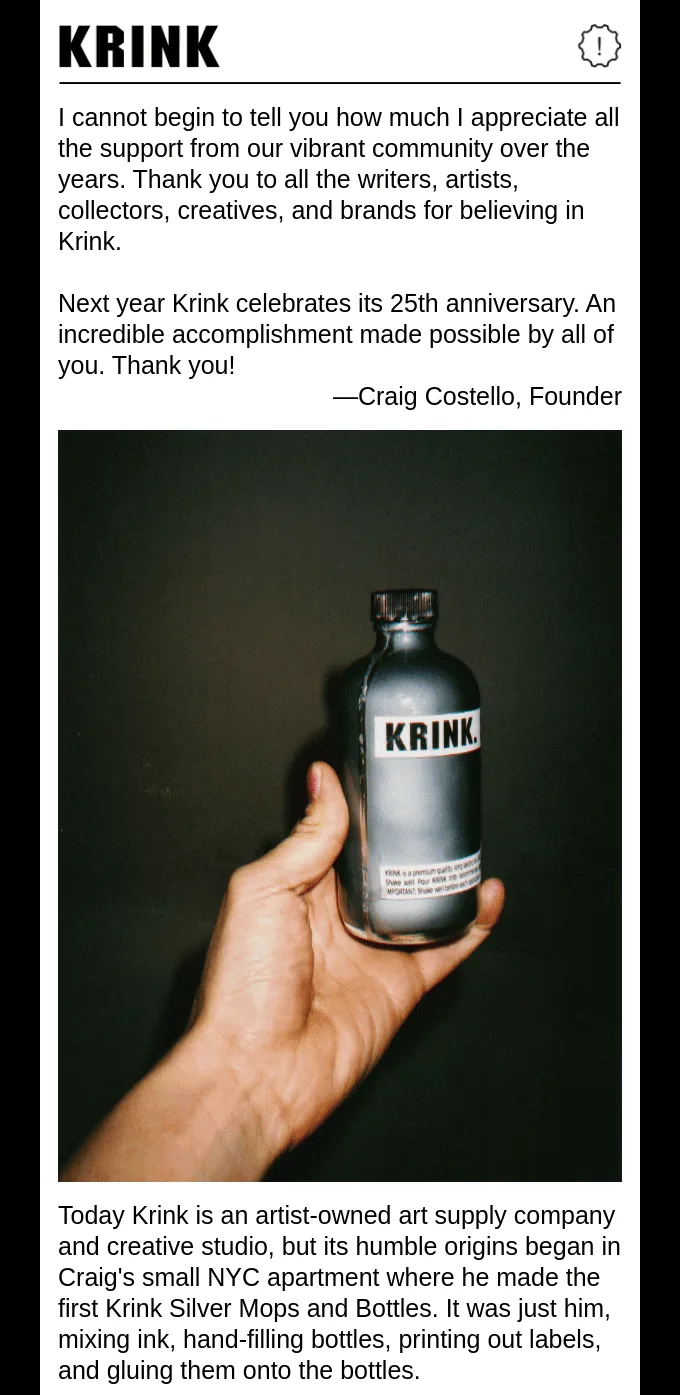
Small brand email example: Krink
This one isn’t a sale email. It’s the art supply brand’s founder thanking customers and telling how the company started in his apartment. That’s the story to tell on Small Business Saturday, with your sale added at the end.
Cyber Monday emails
Cyber Monday deserves its own emails.
It’s the biggest online shopping day of the year. Adobe tracked $14.25 billion in U.S. online sales on Cyber Monday last year, up 7.1%. Black Friday did $11.8 billion.
But Black Friday is catching up. It grew faster than Cyber Monday for the second year in a row. And it’s still the most popular shopping day overall, online and in stores, according to the NRF. Plan both, then check which one wins for your store.
Email 7: Cyber Monday
When: Monday, Nov 30
Who: engaged subscribers who haven’t bought
Its job: bring something new.
Give it a new angle: a new product, a bonus (free shipping, a gift with purchase), or a different collection. “Our Black Friday sale, again” gives people a reason to ignore you.
Subject lines
- Cyber Monday: [new offer]
- One more thing for Cyber Monday
- Free shipping today. Plus [Discount] off.
Preview text: Today only: [the new part].
Template
Hey [First name],
It’s Cyber Monday, so we’re adding something.
[Discount] off is still on, and today you also get [free shipping / a free gift / access to the new collection].
[Product cards or collection image]
[Button: Shop Cyber Monday]
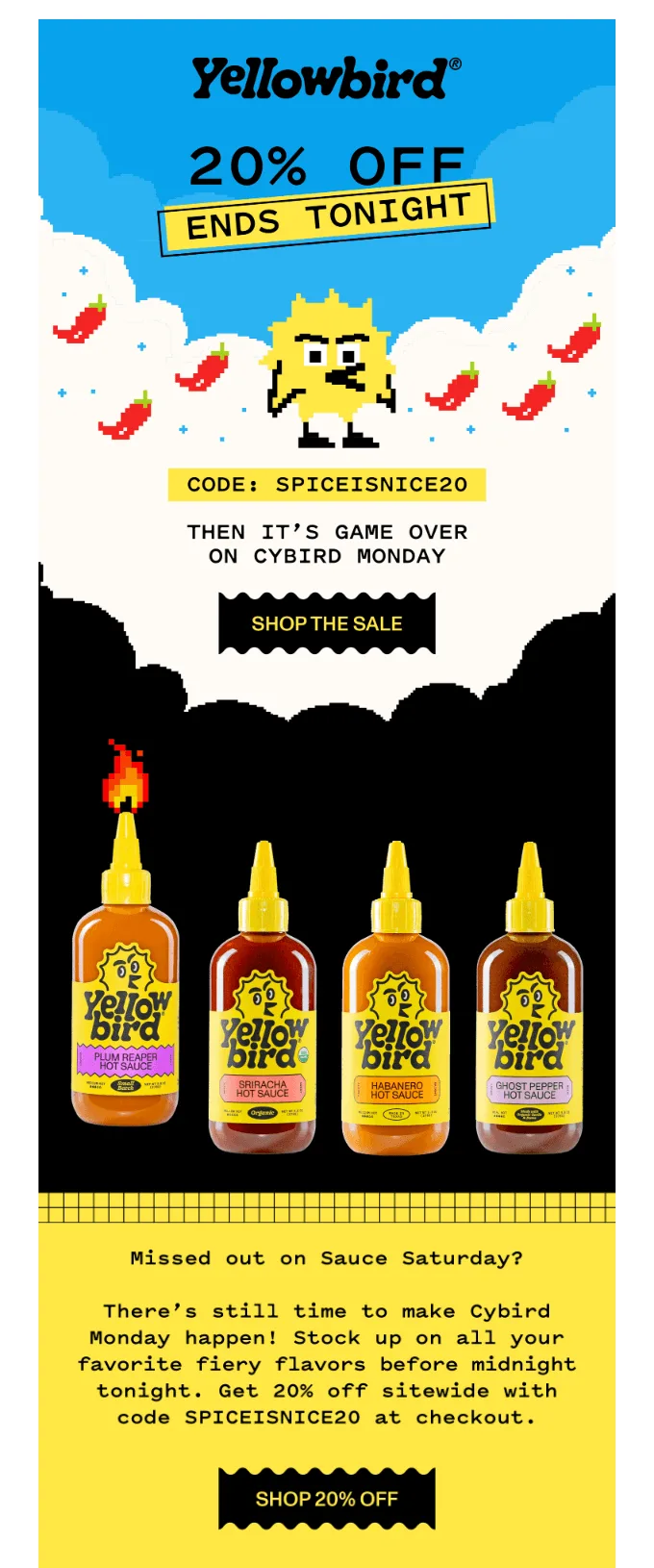
Cyber Monday email example: Yellowbird Sauce
“Ends tonight” sits at the top, the code is right under it, and there’s a line for anyone who missed the weekend: “Missed out on Sauce Saturday?” It talks to the people who haven’t bought yet, which is exactly who this email goes to.
Email 8: Last chance
When: Tuesday, Dec 1
Who: engaged subscribers who still haven’t bought
Its job: close the sale.
This is the one email in the plan that should feel urgent. Because this time, the deadline is real.
Subject lines
- Last day
- The sale ends at midnight
- Final call: [Discount] off
Preview text: After tonight, prices go back to normal.
Template
Hey [First name],
Quick one. Our sale ends tonight at [midnight ET].
[Discount] off [everything]. After that, it’s gone until next year.
[Button: Shop before midnight]
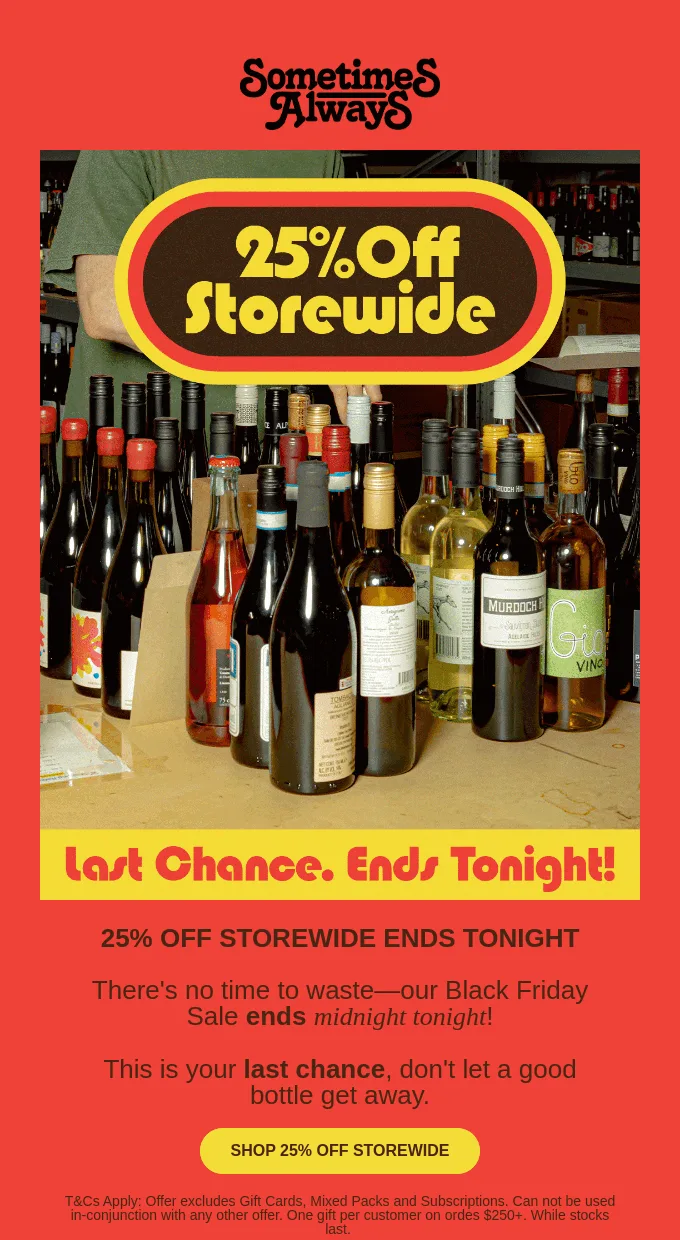
Black Friday email example: Sometimes Always
The deadline shows up three times: in the subject line, the main image and the button. Nobody can miss when it ends.
Then end it. If the “last chance” sale comes back on Wednesday, nobody believes your next one.
Black Friday email design that holds up
Keep it simple. Your email has to work on a phone, in a crowded inbox, for someone who’s half-asleep.
- Mobile first. Big type, one column, buttons a thumb can hit.
- One main button. Every extra link splits the click.
- Put the offer in live text, outside the image. Images get blocked, and text in images can’t be read by screen readers or shown in the inbox preview.
- Check dark mode. Use logos with a light outline or a solid background so they don’t disappear.
- Write alt text. If the image doesn’t load, the alt text is what people see. Make it say the offer.
- Use countdown timers with care. A timer helps on the last-chance email, when there’s a real deadline. On the teaser, it’s just noise.
After the sale
Black Friday brings in new customers. What you send in the next few weeks decides whether they buy again or vanish until next November.
- Send a thank-you with no pitch. Just thanks. Maybe a care tip for what they bought.
- Move them into your post-purchase flow. A review request, a how-to, a “goes great with” suggestion. Our ecommerce email playbook covers the whole flow.
- Send the shipping-cutoff email. “Order by [Dec 18] to get it by Christmas.” One sentence. It works because it’s true.
- Plan a January winback. Holiday buyers who haven’t come back by mid-January get a “we miss you” email.
How to tell it worked
Open rates won’t tell you much. Apple Mail Privacy Protection inflates them. Look at these instead:
- Revenue per campaign. How much each email brought in. Compare it with the same email last year, not with your other sends.
- Unsubscribe and spam complaint rate, per send. If one email spikes either, you sent it to the wrong people or sent too many.
- New vs returning buyers. Did the sale bring in new customers, or just discount sales you’d have made anyway?
- Compare against last year. Your own store, list and numbers tell you more than any industry average.
Write it all down while it’s fresh. Next November, you’ll thank yourself.
Build your Black Friday emails with Reachly
That’s a lot of setup for one week. Your AI agent can do it for you.
Connect ChatGPT or Claude to Reachly and tell it: “Follow this blog post and build my Black Friday emails.” It writes all eight, sets up the segments and leaves you drafts to approve. Nothing sends until you say so.
FAQ
When should I start sending Black Friday emails?
Send a teaser about a week before, so Nov 17 to 20 this year. Start raising your sending volume in early November, so the extra sends don’t look like a sudden spike to Gmail. Starting later than that? Send only to people who opened or clicked recently, and don’t email your whole list every day.
How many emails should I send for Black Friday?
Somewhere between four and eight over the full week. The trick is that no single person gets all of them. Your VIPs hear first, buyers stop getting sale emails, and people who never open get none.
Should I email my whole list on Black Friday?
No. Send to people who opened or clicked in the last 90 days. Emailing people who stopped opening months ago gets you spam complaints, and those hurt every email you send after.
What’s a good Black Friday email click rate?
There’s no single number that fits every store. Use your own average click rate from October as the baseline. If your Black Friday emails match or beat it during the most crowded inbox week of the year, that’s a good result. Watch spam complaints too. Gmail wants them under 0.1%.
Is Black Friday a dying trend?
No. A record 202.9 million people shopped over Thanksgiving weekend last year, according to the NRF. And Adobe tracked a record $11.8 billion in U.S. online sales on Black Friday alone. What’s changing is how people shop it. The sale starts earlier, and more of it happens on phones.
Sources
- Adobe, Cyber Monday 2025 results and 2025 holiday season results
- National Retail Federation, Thanksgiving weekend 2025 shopper survey
- Circana, 2025 holiday purchase intentions survey
- Google, Gmail email sender guidelines
- Yahoo, Sender best practices
- U.S. Small Business Administration, Small Business Saturday